Ages 5-16 • Speaking-first • First 4 conversations free
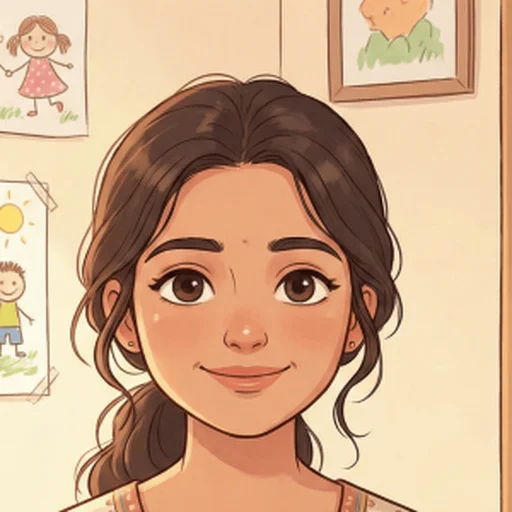
வணக்கம்! நான் தான் கிக்கி. இன்னைக்கு தமிழ்ல பேசலாமா?
“Hi, I'm Kiki! Shall we talk in Tamil today?”
Your child answers out loud
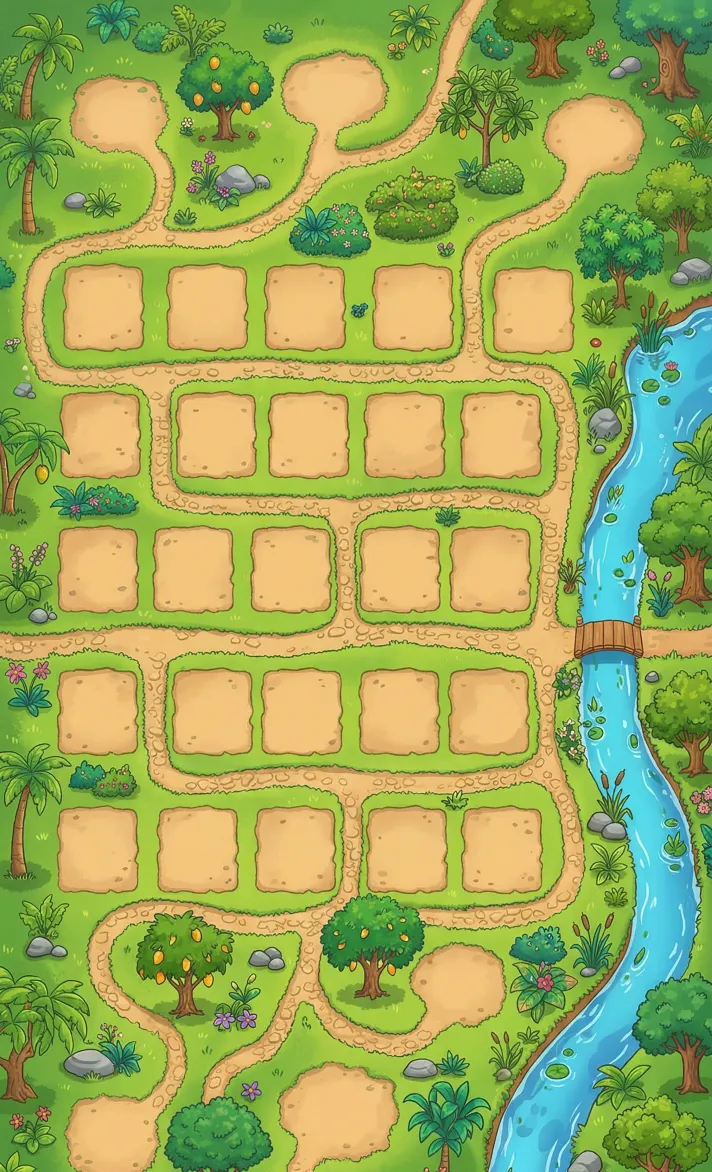
The map is empty. Your child fills it.
Kiki's Paati gave her an old map of the town she grew up in — but it's blank. The only way to bring it alive? Speak Tamil.
Your child speaks
Real voice conversations with Kiki about family, food, festivals, and everyday life
The town grows
Every conversation unlocks a new place — shaped by what they actually said
Paati's town comes alive
Day by day, their Tamil builds a whole town — a visible record of every conversation
Paati's town, day one
Every empty plot is one conversation away from becoming a house, a mandir, a mango tree.
And the town is chapter one
Then their Tamil goes travelling — the India Tour
Finish the town, and the map opens into India itself. Kids journey state by state with Kiki —
describing Amer Fort, interviewing a Kerala elephant keeper, spinning a folktale in the
Sundarbans — in longer, richer conversations that stretch their Tamil into past tense,
questions, and storytelling. Every adventure earns a souvenir for their travel trunk.
Kiki adapts to your child's level, gently guides them, and never makes them feel wrong.
இன்னைக்கு என்ன சாப்பிட்ட?
"What did you eat today?" — Kiki
They talk out loud
Voice conversations, just like talking to a real person — no typing
Kiki listens and keeps them talking
Gets things "wrong" on purpose so your child corrects her — in Tamil
Gentle hints when they freeze
Supportive guidance when needed — never "wrong answer"
Their words become the town
Said "sivappu"? Paati's house turns red. Said "periya"? It grows bigger
What your child sees — and what you see
Your child gets a patient friend who listens. You get a clear window into every conversation.
Your child's screen
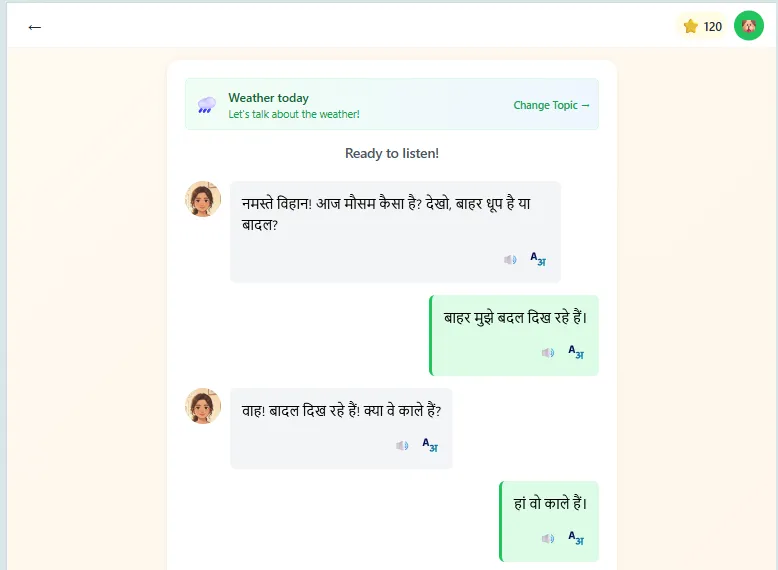
A real conversation with Kiki
Kiki speaks and listens; your child answers out loud. Every bubble can be replayed,
and one tap switches the script to Roman Tamil for kids who can't read Tamil yet.
Your inbox, every week · sample
Ananya's week in Tamil
47Tamil sentences spoken
↑ 12 vs last week
⭐ Star moment
“சூடா இருக்கிற ஜாங்கிரி சாப்பிடுறது தான் ரொம்ப ஜாலி.”
“Eating hot jangiri is the most fun.” — a full sentence, unprompted
Words this week
சாப்பாடு · usedமேகம் · usedபண்டிகை · heard
One area to grow
Case endings (-உக்கு / -ல) — Kiki will gently practice these next week.
Over the months, you watch the line climb
The Speaking Index is our five-level scale for spoken Tamil, from Listener to
Conversationalist. Every weekly report shows your child's level and the one thing
standing between them and the next.
Six decades of language-acquisition research — Krashen, Swain, Long — built into
how Kiki actually behaves, turn by turn.
Recast
She corrects without correcting
Your child says நான் ஸ்கூல் போனேன்.
Kiki never stops to mark it wrong — her next reply simply folds in the right form:
ஓ, நீ ஸ்கூலுக்கு போனியா? ஸ்கூல்ல என்ன பண்ண?
The fix lands inside the conversation. No red pen, no flinch.
Michael Long · corrective recasts
Practice Card
The mistake comes back — until it sticks
After the chat, Kiki pulls the exact sentences your child stumbled on and asks them to say them
again, out loud. And when the same slip keeps returning —
ஸ்கூல் போனேன் where it should be
ஸ்கூலுக்கு போனேன் — it resurfaces as a quick game a
week later. Spaced practice, on your child's own errors.
Swain · pushed output + the spacing effect
Living memory
Kiki remembers your child
Week three isn't a stranger starting over. Kiki carries what your child loves, the words they've
earned, and the grammar they keep tripping on — from one session to the next — so every
conversation builds on the last. The tutoring gets more personal over time, not less.
Longitudinal · unique to your child
Comprehensible input (i+1)
Pitched just above where they are
Kiki listens to how it's going and adjusts in real time — a confident child gets drawn into
longer, harder Tamil instead of being babied; a child who's stuck gets simpler footing. New words
always arrive inside sentences they can already follow.
Krashen · comprehensible input
Grounded in the modern consensus on how a second language is actually acquired —
Krashen & Terrell (1983), Swain (1985), Schmidt (1990), Long (1996).
We started this because of a child who understands every word their grandmother says, and answers in English. Nowhere in that child's
week was there a place to practise speaking without an audience. We've been building
that place ever since: ten judgment-free minutes a day with Kiki, and a report to you
every week so you always know how it's going.
We're building the first serious practice platform for spoken Indian languages — starting with Tamil, one family at a time.
Advised by Prof. Surinder Tikoo,
Professor of Marketing & International Business at SUNY New Paltz.
Kiki is built for children from the ground up, not a general chatbot pointed at kids.
Here's exactly how we keep it safe and private.
A bounded tutor, not an open chatbot
Kiki does exactly one thing: guide your child through a Tamil conversation on a set topic.
There's no open-ended prompt for a child to wander into, and no ads — ever.
Your data is never sold
We never sell, rent, or trade your family's data — full stop. Only a parent can create an
account, and you can review, export, or delete everything at any time.
Recordings you control
Your child's recordings are encrypted, kept for your review in the parent dashboard, and
auto-deleted after 12 months. Anything used to improve our AI is anonymized and fully opt-out.
Speaking Tamil doesn't need to be there yet, but a little understanding helps. Kiki is built
to grow your child's confidence speaking Tamil and to create the daily Tamil environment that's
missing around them, even if they mostly reply in English at first. Every child's level is
different and hard to label, so the best way to know is to try it: if they can follow the first
topic, which is the easiest one, it's a good fit.
Why can't parents just use ChatGPT voice?+
ChatGPT can talk Tamil. The hard part is voice AI built with comprehension and pedagogy
engineering for language acquisition: hearing a five-year-old who mumbles half in Tamil and
half in English in a noisy room, without inventing words they never said, and teaching
adaptively. That means correcting them without making them feel corrected, remembering where
they struggled last week to reinforce those concepts, gradually increasing difficulty, and
celebrating their progress. We built an engine for exactly that. The foundational voice
models are the engine; we built the car, the seatbelt, and the driving lessons, for a child.
Will this help with my child's Tamil class at school?+
Yes. The curriculum covers family, food, festivals, animals, and everyday life, the
topics that align with what schools teach. Kids who practice speaking do better in class,
and the daily habit keeps them coming back.
Do I need to sit with my child?+
For 5-6 year olds, yes, they might need help getting started. 7+ year olds can often
use it independently, and the daily progress gives them a reason to keep going on their own.
What does it cost?+
The first 4 conversations are free, and you don't need to enter a card.
After that it's
a plan priced for your country,
shown to you before you enter any card details. The 3-, 6- and 12-month plans work out cheaper per month.
We email you after the third conversation, before the free ones run out —
nothing is charged unless you choose a plan, you can cancel anytime, and the topics your child has
completed stay free to replay either way.
Paati's town is waiting
One conversation. One new place on the map. Start building today.